

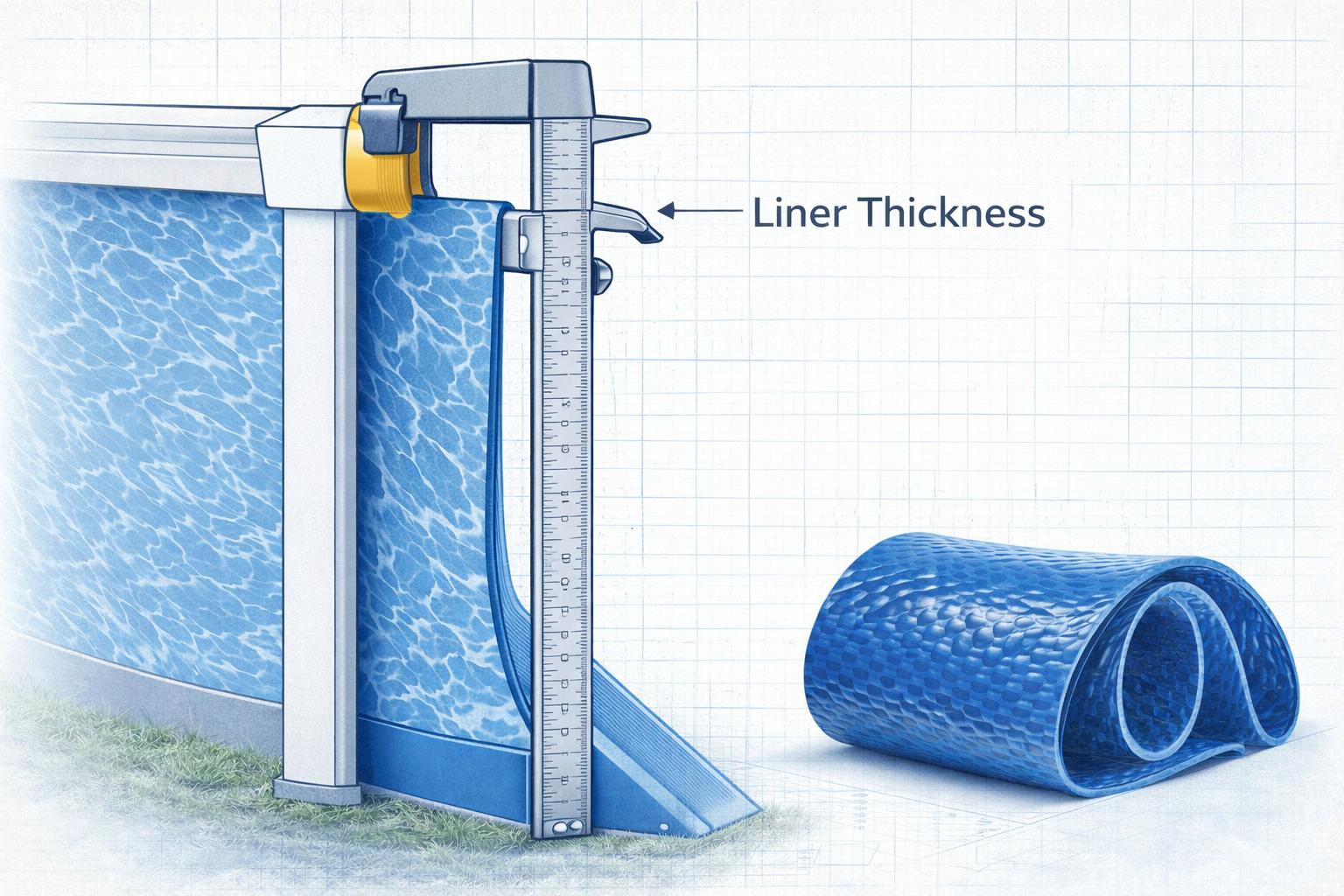
Choosing Your Ideal Thickness: A Guide to Above Ground Pool Liners for Every Homeowner
One of the most important considerations when choosing the best above ground pool liner is balancing durability with ease of installation. For the majority of homeowners, a standard 20 mil liner or a more premium, thicker liner provides the ideal blend of strength, flexibility, and value. A thicker, premium liner offers superior puncture and tear resistance, making it the best choice for pools with heavy use from kids, pets, or frequent parties. In contrast, a standard 20 mil liner is more pliable and budget-friendly, making it an excellent and reliable option for well-maintained pools with a properly prepared, smooth base. Ultimately, your specific pool usage, installation confidence, and budget will determine the perfect thickness for your needs.
Key Takeaways at a Glance
- Thickness is Measured in "Mil": The industry standard for liner thickness is the "mil" (1/1000"), which represents an average thickness; minor variations are a normal part of manufacturing. Reputable manufacturers test for quality and warranty their products. For example, a 20 mil liner averages 0.020 inches thick. Some manufacturers use "gauge" as an alternative measurement; it's important to know this is an internal standard that can vary between brands.
- Thicker Isn't Always Better For Everyone: A thicker liner is more durable but is also heavier and stiffer, making installation more challenging, especially in cooler weather.
- Standard is Still Strong: Standard liners offer excellent performance and longevity for most residential pools and is significantly more flexible and easier for a DIY installer to handle.
- Installation Pro-Tip: Regardless of thickness, let your new liner sit unfolded in direct sunlight for a couple of hours on a warm day before installation. The heat makes the vinyl more pliable, simplifying the process of smoothing out wrinkles.
- The Foundation is Crucial: The longevity of any liner, thick or thin, depends heavily on the preparation of your pool's base. Using a liner pad and pool cove provides critical protection from below.
What Does Liner Thickness Actually Mean? Mil vs. Gauge Explained
When you start shopping for a new above ground pool liner, you'll immediately encounter two terms used to describe thickness: mil and gauge. Understanding the difference is critical to making an informed decision. One term is a precise, industry-wide measurement, while the other is often specific to a manufacturer.
Why "Mil" is the Industry Standard
In the pool industry, "mil" is the definitive unit of measurement for liner thickness. It's simple, precise, and universally understood.
- 1 Mil = 1/1000th of an inch.
This means a 20 mil liner has a target thickness of 0.020 inches, and a 25 mil liner a target of 0.025 inches. It’s important to understand that this is an average measurement taken across the entire production process. Slight variations are a normal and expected part of vinyl manufacturing, but reputable companies constantly test and monitor the material to ensure it meets quality standards and is backed by a warranty. The mil measurement remains a direct and reliable standard, allowing for a true apples-to-apples comparison between different liners and brands, such as industry leaders Swimline, GLI, Pegasus, and Freetime Fun pool liners. When you see a thickness specified in mil, you can trust you are getting a product that meets a reliable industry standard.
Understanding "Gauge" as a Measurement
"Gauge" is an alternative measurement used by some manufacturers. It's important to understand that, unlike "mil," it does not have a universal standard in the vinyl liner industry. The term was originally borrowed from other industries (like steel or wire), and its application to pool liners is internal to each manufacturer. This means a "25-gauge" liner from one company might be a different thickness than a "25-gauge" liner from another. What the gauge measurement can tell you is that a manufacturer's 30-gauge liner is thicker than their own 20-gauge liner. A strong indicator of quality, regardless of the measurement used, is the product's warranty—it will tell you a lot about expected durability. If you still have questions or need help with your decision, call our experts at 1-800-918-POOL (7665) or email us at [email protected].
How Do I Choose the Right Thickness for My Pool?
The central question of above ground pool liner thickness comes down to a direct trade-off: durability versus installation ease and cost. Let's break down the practical considerations for each standard thickness to help you decide.
The Case for a Thicker, Premium Liner
A thicker, premium liner is the heavy-duty option. The additional material provides a significant increase in strength, making it more resistant to punctures, abrasions, and tears. This is the premium choice for pools that are expected to endure more than just casual swimming.
A thicker liner is best for:
- Families with Active Kids and Teens: More forgiving of sharp pool toys, roughhousing, and constant activity.
- Pool Owners with Dogs: While no vinyl liner is completely immune to a dog's claws, a thicker liner offers much better protection against accidental punctures and scratches as pets enter and exit the pool.
- Pools with Imperfect Bases: If your sand base isn't perfectly smooth or you're concerned about small roots or pebbles, the extra thickness provides a valuable layer of protection (though it is not a substitute for a liner pad).
- Long-Term Value: For those who want the longest possible lifespan from their liner and want to minimize the chance of a premature replacement, the higher upfront cost of a thicker liner is a worthwhile investment.
The Trade-Offs: The primary downsides are cost and installation difficulty. A thicker liner is noticeably heavier and stiffer than its 20 mil counterpart. This can make it difficult for a single person to manage. It requires a warm, sunny day (ideally 75°F or warmer) to become pliable enough to stretch into place and eliminate wrinkles effectively.
The Case for a Standard Liner (20 Mil)
A 20 mil liner is the most popular choice for above ground pools for a reason. It hits the sweet spot of reliable durability, flexibility, and affordability, making it the practical workhorse of the industry. Don't mistake "standard" for "low quality"—a well-made 20 mil liner from a reputable brand will provide many years of service when properly installed and maintained.
A 20 mil liner is best for:
- DIY Installers: The lighter weight and increased flexibility make a 20 mil liner much more manageable, especially for first-timers or those working alone. It's easier to lift, unfold, and adjust into position.
- Budget-Conscious Buyers: A 20 mil liner offers a significant cost saving compared to a thicker premium liner of the same size and pattern, freeing up funds for other essential accessories.
- Pools with Meticulously Prepared Bases: If you have a perfectly smooth sand or vermiculite base and use a high-quality liner pad, the extreme puncture resistance of a thicker liner becomes less critical.
- Pools with Light-to-Moderate Use: For couples, empty-nesters, or families with younger children who primarily use the pool for casual swimming, a 20 mil liner is perfectly sufficient.
The Trade-Offs: The primary compromise is reduced puncture resistance. It is less forgiving of a sharp object dropped in the pool or an imperfect pool floor. While still very durable, it simply has less material to resist a potential tear compared to a thicker liner.
Does My Pool's Environment Affect My Liner Choice?
Yes, absolutely. Beyond just who is using the pool, your specific environment and setup play a significant role in determining the ideal liner thickness.
Your Pool's Foundation
This is the most overlooked but critical factor. A perfectly smooth base protected by a high-quality liner pad and a properly installed pool cove creates the ideal environment for any liner. If you invest in this foundation, a 20 mil liner becomes a very robust choice. Conversely, installing a top-of-the-line 25 mil liner over a base filled with small rocks, roots, or uneven spots is a recipe for failure. The liner's strength can't overcome constant pressure from sharp points below.
Your Climate and Installation Timing
Vinyl becomes stiff in the cold. If you live in a northern climate with a short installation window, this is a real consideration. A 20 mil liner will become workable on a 70°F day, whereas a thicker liner really needs a day closer to 80°F and direct sun to become truly cooperative. Struggling with a cold, stiff thick liner can lead to a poor fit and stubborn wrinkles.
Beyond Thickness: What Else Protects Your Pool Liner?
Choosing the right mil is important, but it's only one part of a complete system designed to protect your investment. The best above ground pool liner is one that is supported by the right accessories. Thinking that thickness alone will solve all potential problems is a common mistake. These components are essential for maximizing the life of any liner.
Liner Pad
A liner pad is a non-negotiable accessory for any new liner installation. This is a tough, geo-textile fabric that lays on top of your sand base, directly underneath the liner. It acts as a final, impenetrable barrier against anything sharp that might be in the sand or emerge from the ground over time, such as rocks, nut grass, or roots. It's the ultimate defense against punctures from below.
Pool Cove
The transition from the pool floor to the wall is a high-stress point for the vinyl. A pool cove is a wedge of foam that sits at this junction, creating a gentle, curved slope. This prevents the liner from being stretched taut into a 90-degree angle, which can strain the material and seams over time, leading to premature failure. It's a simple, inexpensive part that dramatically extends liner life.
Wall Foam
The metal walls of an above ground pool can have minor imperfections, rust spots, or sharp edges, especially around the skimmer and return cutouts. Wall foam is a thin layer of closed-cell foam that adheres to the inside of the pool wall before the liner is installed. It provides a smooth, cushioned surface that protects the liner from abrasion and potential punctures from the wall itself, while also adding a soft feel to the pool's interior.
Common Mistakes to Avoid When Choosing a Liner
Navigating the options can be straightforward if you know what pitfalls to look out for. Here are a few common mistakes homeowners make that you can easily avoid.
- Mistake #1: Focusing Only on Price. A pool liner is not a place to cut corners. The initial savings from a cheaper, thinner, or off-brand liner can be quickly erased by the cost of thousands of gallons of water, chemicals, and the labor involved in a premature replacement.
- Mistake #2: Confusing Gauge with Mil. As we've covered, "gauge" is a manufacturer-specific term. While it's useful for comparing liners within the same brand, avoid assuming a 25-gauge from one company is the same as a 25-mil or even a 25-gauge from another. To make a confident comparison, focus on the mil specification when available, or check the warranty and contact an expert for guidance.
- Mistake #3: Neglecting the Pool Base. The most expensive, thickest liner in the world will fail if installed on a poorly prepared base. Take the time to ensure your pool floor is level, smooth, and free of any debris before you begin.
- Mistake #4: Ignoring Your Pool's Specifics. Ensure you are buying the correct type of liner for your pool (Overlap, Beaded, J-Hook, or Unibead) and that you have measured your pool's dimensions accurately. Buying the wrong size or type is a costly and frustrating error.
The right above ground pool liner thickness for you is a personal decision based on your pool's use, your budget, and your installation plan. A thicker, premium liner provides peace of mind and maximum durability for high-traffic pools, making it a sound long-term investment. A 20 mil liner delivers fantastic performance and value, with the added benefit of a simpler, more forgiving installation process. By understanding these trade-offs and ensuring your liner is supported by a properly prepared base and the right accessories, you can confidently select the perfect liner from a trusted source like poolstore.com and look forward to years of enjoyment.